Working together
Work directly with the person building it
Agree the task, see working progress and receive a simulator your team can use and maintain.
Book a call with Faisal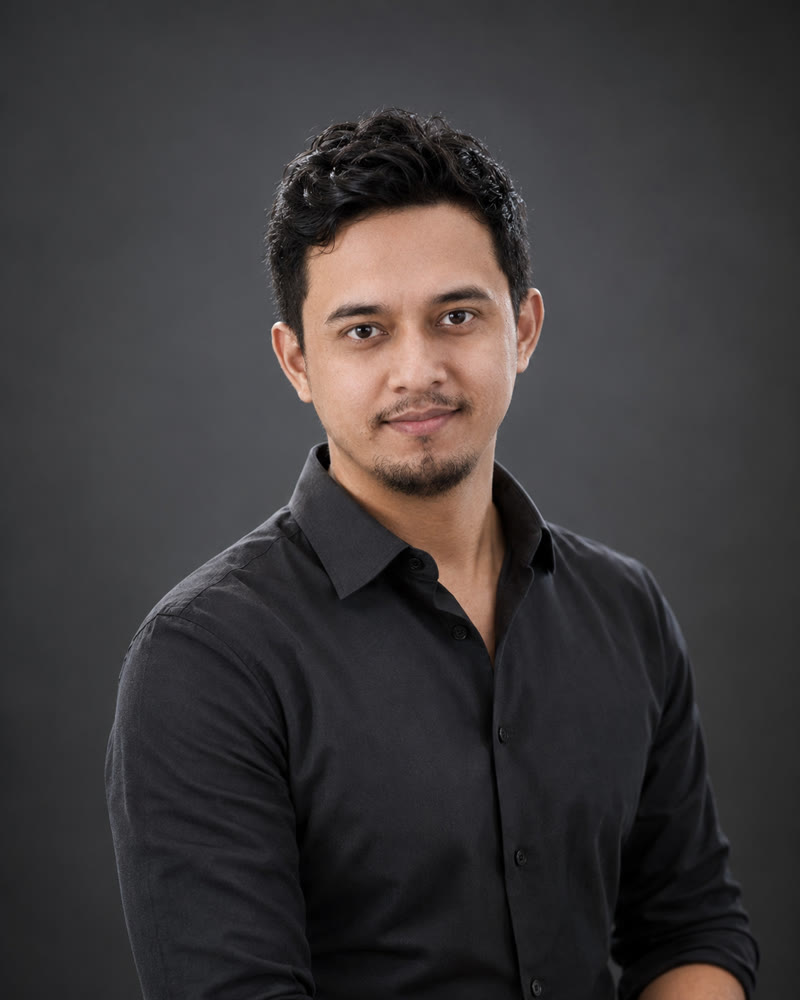
Muhammad Faisal
Founder and Unreal Engine developer
I design and build the simulator you commission. My work includes heavy-equipment operator training, welding practice and industrial assessment. You speak directly with me from scoping through handover.
Batu, Indonesia / UTC+7
View Faisal's LinkedIn →- Business name
- Simvra Tech
- Founded
- 2018
- Based in
- Batu, Indonesia
- Working language
- English
4+ hours of daily overlap with European business hours; full overlap with the Gulf.
Pilot from $6,000
Start with one useful module
One equipment package and one bounded procedure or demo flow, scoped to a maximum 2-5-week build. We agree the target device, interactions and acceptance criteria before quoting.
The delivery dates also depend on asset readiness and your review schedule. They are agreed in the proposal.
A concrete first step
For example, one maintenance procedure for one machine, with the actions and feedback agreed in advance. The pilot gives your team a working build to evaluate before committing to a larger program.
Start a full build within 6 months and 50% of your pilot investment is credited toward it. The pilot groundwork carries into the program.
See a delivered procedureFrom first message to handover
Know what happens next
1. Define the first task
Describe the equipment, the people using it and the procedure or demonstration. We agree what the first module needs to prove.
2. Agree the scope and price
The proposal sets the application, target device, inputs, review points, acceptance criteria, price and schedule.
3. Review working builds
See weekly progress builds. Check the layout and interactions before visual polish; your subject-matter expert reviews the procedure.
4. Validate and hand over
Check the agreed behaviour and performance on the target device. Receive the application, project source and documentation, with source delivered at milestones.
What you provide
- Equipment models or references, plus your procedure documents and safety standards.
- A subject-matter expert who can answer questions and review the simulated task.
- Intended users, training or demo setting, and the hardware you need to run it on.
What you receive
- The agreed application and build for the selected target device.
- The scoped procedure, interactions and assessment or feedback, where included.
- Validation against agreed acceptance criteria, plus build instructions and documentation.
- Project source at milestones, with the reusable framework licensed for continued use.
Clear responsibility, useful handover
I lead the design and build. Specialist 3D artists or developers join when the agreed scope calls for them, with their roles made clear. We agree the delivery team, review milestones and start date before work begins.
You own the project-specific content, scenes, builds and source. Simvra retains its reusable framework, licensed to you perpetually and non-exclusively within your project.
You can maintain and extend the simulator with another Unreal Engine team. Build instructions and documentation are part of delivery.
- Milestone-based billing, tied to agreed deliverables and review points.
- 30 days of post-delivery bug fixing are included at no additional cost.
- Concurrent work is capped. Simvra runs at most 2 builds at a time. Your timeline is a commitment we can actually keep.
What does a full training program typically cost?
A typical scoped full training program is $20,000-$45,000. The price depends on the number of scenarios, equipment and asset complexity, interactions, assessment and reporting, target devices and integrations. Larger or more complex programs are scoped individually.
Devices, assessment and integrations
Standalone Quest 3, PC VR and desktop are possible targets. Your project is scoped for the selected device; support for every platform is not included by default. Assessment, reporting, LMS connections and fleet deployment are included only where agreed.
Reviews and communication
Weekly progress builds and written updates keep decisions visible. Your subject-matter expert reviews the procedure. We agree their review time and the acceptance checkpoints during scoping.
replies within 1 business day. Written feasibility and ballpark within 2 business days of a call.
Confidential materials and licences
NDA before any material exchange. Start the conversation with a description of the task; share confidential models and documents after the NDA is in place.
The project licence preserves Simvra's reusable framework. Device management, if required, is client-licensed. Required platform and third-party licences are identified in scope.
Stack and standards
- Engine
- Unreal Engine 5
- CAD pipeline
- Datasmith: CATIA / SolidWorks / STEP
- Devices
- Quest 3 standalone · PC VR · desktop
- Training standards
- SCORM · xAPI
- Fleet deployment
- ArborXR / ManageXR ready (client-licensed)
- Connectivity
- fully offline standalone builds · networked where scoped
What you provide, time-wise
- Subject-matter expert access: roughly 4-8 hours per module.
- SOPs, procedure documents, safety standards.
- CAD models (CATIA, SolidWorks, STEP, via Datasmith).
What lowers it: CAD you already have, available subject-matter experts, existing SOPs, and reusing environments across modules. Follow-on modules are typically lower-cost because the foundation, pipeline, and reusable systems are already built.
After delivery
Optional care is quoted for the engagement. It can cover compatibility checks, priority fixes and content updates. Connected systems may need ongoing integration maintenance; a standalone application may need lighter support.
Tell me what your team needs to do
A machine, a procedure and the people who need to use it are enough to start the conversation.
replies within 1 business day